

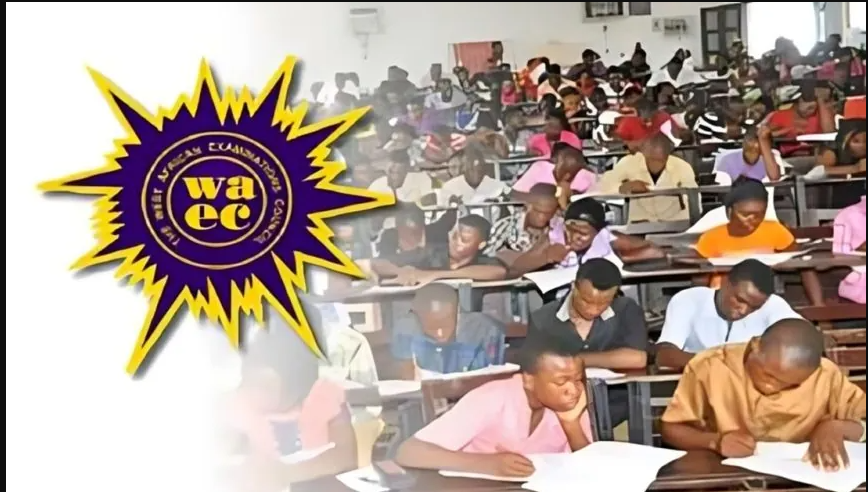
The House of Representatives has directed the Federal Ministry of Education and the West African Examinations Council (WAEC) to immediately suspend the Computer-Based Test (CBT) policy slated for implementation in the 2026 Senior Secondary School Certificate Examination (SSSCE), citing the risk of widespread failure and psychological distress among students.
The resolution followed the adoption of a motion of urgent public importance sponsored by Hon. Kelechi Wogu (PDP, Rivers), who warned that rolling out CBT for the high-stakes examination without adequate infrastructure would be disastrous for millions of candidates.
Wogu argued that WAEC remains a mandatory qualification body for university entry, requiring candidates to secure at least five credits, including English and Mathematics. Yet, he noted that this year’s result portal suffered “technical glitches” that left students stranded — an issue he fears could worsen if the examination transitions to full CBT without preparation.
According to the lawmaker, over 25,500 secondary schools nationwide produce candidates for WAEC each year, with the 2026 exam scheduled to run for four months, from March to July. However, he stressed that most public and private schools — especially those in rural communities that host more than 70% of students — lack basic computer infrastructure, trained ICT teachers, reliable internet and steady electricity.
He further pointed out that, unlike JAMB’s CBT—which tests candidates in just a few subjects—WAEC candidates typically sit for a minimum of nine subjects, including theory, objectives and practicals, making the transition far more complex.
“It is wrong to start this policy now without adequate preparation,” Wogu insisted, recommending that the Ministry of Education and WAEC adopt a minimum three-year transition plan, with full implementation postponed until the 2029 or 2030 academic year.
He warned that forcing students into the unprepared system would lead to “devastating outcomes,” including massive failure, frustration, depression, drug abuse and other social vices.
Following a unanimous vote, the House directed the Federal Ministry of Education to work with state governments to provide the necessary infrastructure for secondary schools between 2026 and 2029. This includes:
- Recruitment of computer teachers
- Construction of computer halls with internet connectivity
- Installation of standby generators
- Provision of required ICT facilities in private schools ahead of 2030 rollout