

Recall in the part one of this article : school-fees-drive-part-one-a-difficult-reality-parents-must-confront, I took a dive into the school management realties, emphasized on implications of failure on part of parents failing to meet up with fee schedule.
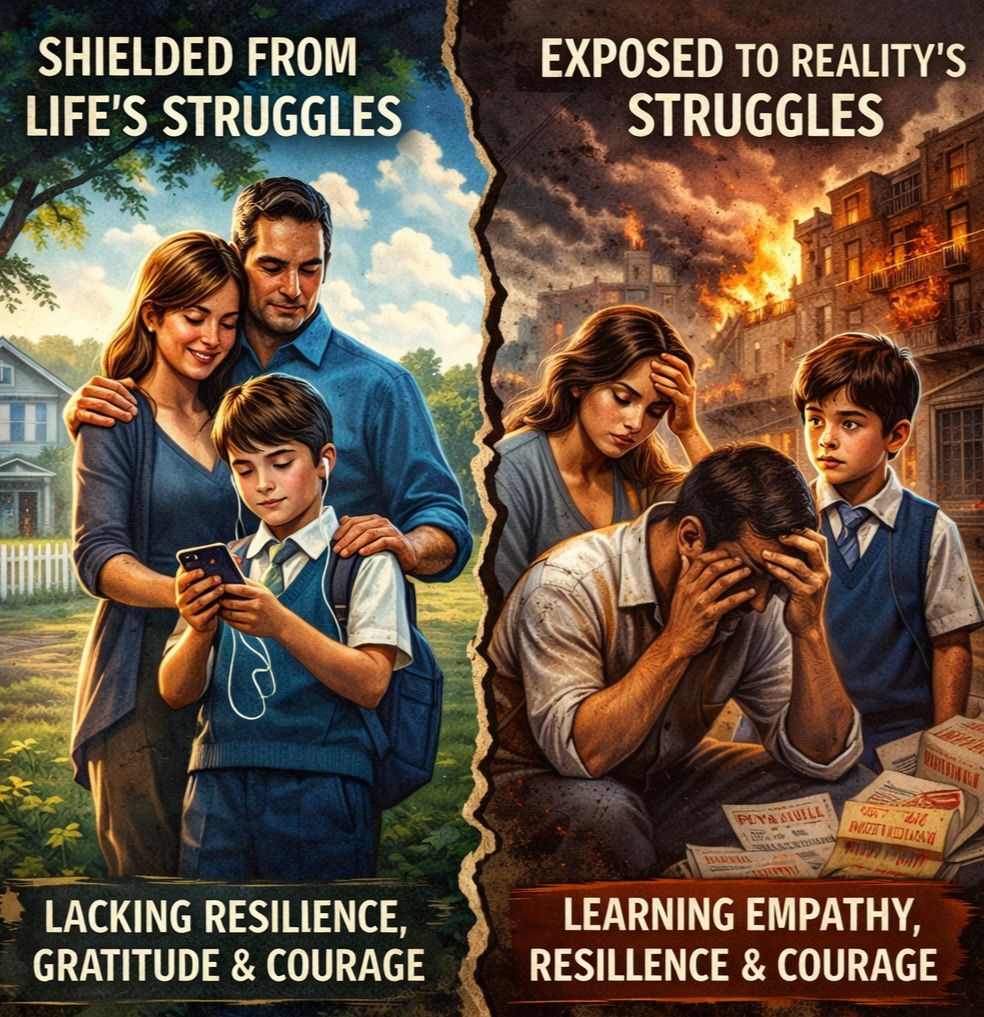
Now, let’s flip the coin, and look at this subject from the place of training and life’s reality. Beyond the school system, there is a deeper concern rarely discussed: the long-term impact on children who are shielded entirely from life’s struggles.
A child who grows up without ever encountering inconvenience, discomfort, or accountability often develops a distorted view of life. Such children may assume that all needs must be met effortlessly and that responsibility is optional. When they eventually face real-world challenges—failure, rejection, financial pressure, or delayed gratification—they struggle emotionally and psychologically.
Resilience is not taught through comfort alone. Emotional balance, courage, patience, and grit are developed when children see, experience, and process challenges in healthy ways. When parents go to great lengths to hide every hardship—especially financial responsibility—from their children, they deny them essential life lessons.
Seeing parents confront difficulties responsibly, make sacrifices, negotiate, prioritize, and sometimes face consequences builds emotional intelligence in a child. It teaches empathy, gratitude, perseverance, and respect for systems and authority. A child who understands that education has value and cost is more likely to appreciate learning and respect institutions.
This does not mean children should be humiliated or emotionally abused. There is a clear difference between constructive exposure to reality and cruelty. However, discomfort alone is not trauma. In many cases, it becomes a powerful teacher.
Life will eventually “call out” every individual—through bills, responsibilities, deadlines, and consequences. A child who has never been allowed to experience controlled discomfort may lack the emotional tools to cope when life becomes demanding.
The conversation around school fees must move beyond emotion alone and include responsibility, realism, and long-term development. Schools must survive to educate, and children must grow to face life with strength and understanding.
Calling a child out for unpaid fees is not a perfect system—but neither is raising children without exposure to accountability. The goal should not be to eliminate discomfort at all costs, but to balance compassion with responsibility, and protection with preparation.
In preparing children for life, we must remember: education is not only about classrooms—it is also about character.