
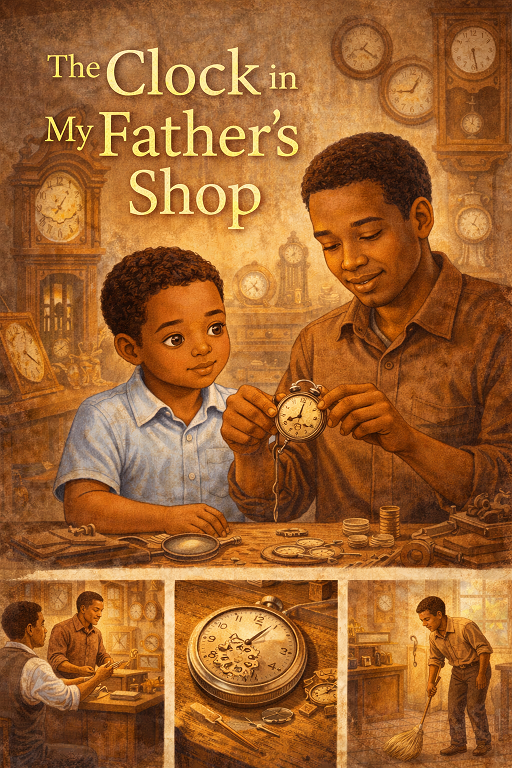
Chapter One: The Shop on the Corner
My father’s shop stood quietly on the corner of our street, small but always busy. Every morning, before the sun fully rose, my father unlocked the wooden door and swept the floor. The shelves were neatly arranged, and the smell of oil and metal filled the air. To him, the shop was more than a place of work—it was a place of responsibility.
On the wall hung an old clock with a loud, steady tick. It was impossible to ignore. The clock never rushed and never delayed. My father trusted it completely. He often said time was precious and must be treated with discipline. I did not understand his words then, but I heard them every day.
Customers came early, some before breakfast. My father greeted each one with respect. He worked carefully, never wasting a minute. I watched him closely, noticing his dedication to his work and to the people who depended on him.
Sometimes, I sat on a stool and listened to the ticking clock. Each sound felt like a reminder. Though I was young, I sensed that the shop was teaching me something important. It was shaping my character, even before I realized it.
That shop on the corner was where my lessons began. I did not know it yet, but the clock, my father, and the quiet mornings were guiding me toward a better understanding of time and values.
Vocabulary Focus – Chapter One
- Responsibility – the duty to take care of something or someone
- Discipline – the ability to follow rules and manage time well
- Dedication – strong commitment to work or duty
- Character – the way a person thinks and behaves
- Values – important beliefs that guide actions
Chapter Two: The Clock That Never Lied
The clock in my father’s shop never failed. No matter how busy the day became, its hands moved steadily, marking each passing second. My father often looked at it before speaking to customers or starting a task. He believed the clock represented accuracy, something every worker should value.
One morning, a man arrived late and complained that the shop should have opened earlier. My father calmly pointed to the clock on the wall. The time was clear for everyone to see. He explained that time tells the truth, even when people do not want to hear it. I watched closely and learned the importance of honesty.
As the day continued, I noticed how my father planned his work. He measured, repaired, and sold items without rushing. He followed a clear routine, knowing that order saved time and reduced mistakes. The shop ran smoothly because of his careful habits.
Later, my father called me aside. He said excuses could not change the clock’s hands. Only punctuality—being on time—earned trust. His words stayed in my mind as the clock ticked loudly above us.
That evening, as we closed the shop, I realized the clock was more than a tool. It was a silent judge, teaching accountability to anyone willing to listen.
Vocabulary Focus – Chapter Two
- Accuracy – being correct and exact
- Honesty – telling the truth and being fair
- Routine – a regular way of doing things
- Punctuality – being on time
- Accountability – taking responsibility for actions
Chapter Three: My Trouble with Mornings
Mornings were my greatest struggle. While my father woke up before sunrise, I often stayed in bed, listening to the clock tick and hoping time would slow down. My attitude toward mornings was careless, and I did not yet understand the cost of delay.
Many times, I arrived at the shop late. By then, customers had already come and gone. My father never shouted, but his silence made me feel uneasy. I began to notice how lost minutes turned into lost opportunities.
Instead of helping, I created excuses for my lateness. I blamed sleep, the weather, or the long road. But deep inside, I knew the truth. I was choosing comfort over duty.
One day, my father explained that every habit shapes the future. He said laziness grows quietly if not corrected. His words made me reflect on my behavior for the first time.
That morning, as the clock struck another hour, I realized my problem was not time—it was self-control. The lesson stayed with me, louder than the ticking clock.
Vocabulary Focus – Chapter Three
- Attitude – the way a person thinks or feels about something
- Uneasy – feeling uncomfortable or worried
- Excuses – reasons given to avoid responsibility
- Reflect – to think deeply about something
- Self-control – the ability to manage one’s actions and choices
Chapter Four: Father’s First Warning
One afternoon, I arrived at the shop later than usual. The morning had slipped away while I lingered in bed, ignoring the ticking of the clock. My father looked at me quietly, but his eyes held a sharp sternness that I had never seen before.
He called me over and said, “Time waits for no one. If you do not respect it, life will pass you by.” His words were calm, yet filled with authority. I knew he meant every word. This was the first time I truly felt the weight of my father’s expectations.
He explained that being late was not only unfair to him but also to our customers. People relied on us to open the shop on time. Without punctuality, the trust of others is lost. His words taught me about consequences—what happens when we fail to act responsibly.
For the first time, I noticed the small details in the shop: the neatly stacked shelves, the polished counters, and the ticking clock that never stopped. Everything in the shop required care and attention, and my tardiness was a disruption. I felt a pang of regret for every missed opportunity to help.
That evening, I sat quietly by the window, watching the shadows grow long. I promised myself I would change. I realized that life was a series of choices, and each choice had an impact. With determination, I resolved to rise earlier and honor my father’s lessons about time and responsibility.
Vocabulary Focus – Chapter Four
- Sternness – serious and strict behavior
- Authority – power or control, often with respect
- Consequences – the results of actions, good or bad
- Regret – a feeling of sadness for mistakes
- Determination – strong will to achieve something
Chapter Five: When I Chose Play Over Duty
One sunny afternoon, I decided to skip my shop duties. The day was warm, and my friends called me to play outside. For a moment, I forgot about the clock on the wall and the shelves that needed attention. I ran toward the playground with a sense of excitement, leaving my responsibilities behind.
Hours passed quickly. When I returned to the shop, I saw a customer leaving angrily because no one had attended to them. The shop was slightly messy, and my father’s face held a quiet disappointment that pierced deeper than any scolding. I felt a wave of shame and realized my choice had consequences.
My father spoke softly but firmly. “Fun is good, but duty comes first. Every action has a repercussion, and today you are learning that the clock does not forgive negligence.” I nodded, feeling the weight of my mistake. I understood that time wasted cannot be recovered.
That evening, I reflected on my actions. I understood the meaning of responsibility in a way I hadn’t before. Taking care of the shop, honoring my father’s trust, and respecting the clock’s message were lessons I could not ignore.
I made a silent promise to myself: from now on, I would balance work and play, knowing that true joy comes from fulfilling my duties first. My father nodded, sensing my resolve, and I felt a new determination to honor the lessons of the shop and the ticking clock.
Vocabulary Focus – Chapter Five
- Excitement – a feeling of happiness and eagerness
- Disappointment – sadness or displeasure caused by someone’s actions
- Repercussion – a consequence or result of an action
- Responsibility – the duty to take care of something or do what is expected
- Resolve – a firm decision to do something
Chapter Six: The Day the Clock Stopped
One morning, I entered the shop as usual, but something was different. The clock on the wall had stopped. Its hands were frozen, and the familiar ticking sound was gone. For a moment, the shop felt empty and quiet, almost eerily so. Customers glanced at the clock and frowned, unsure of the correct time.
My father examined the clock carefully. “Even the smallest things matter,” he said. “This clock runs the shop as much as we do. When it stops, everything feels unsettled.” I realized that something I had always taken for granted now showed its true significance.
As we tried to repair the clock, my father explained that time is not just minutes and hours—it is a measure of commitment. Every tick is a reminder to stay disciplined, honest, and attentive. I listened closely, understanding that my previous carelessness had delayed my growth.
While working, I learned about patience. The clock was delicate, and every gear and spring had to be handled with care. One wrong move could damage it further. I learned that some lessons require careful attention and thoughtful action, just like life itself.
By evening, the clock ticked again. The shop felt alive once more, and I felt a deep sense of appreciation. I promised myself that I would never take the lessons of time and responsibility lightly again. The broken clock had taught me a truth I would not forget: even the smallest pause can affect everyone around you.
Vocabulary Focus – Chapter Six
- Eerily – in a strange and slightly frightening way
- Significance – importance or meaning
- Commitment – a promise or dedication to do something
- Attention – careful thought or focus
- Appreciation – understanding the value of something
Chapter Six: The Day the Clock Stopped
One morning, I entered the shop as usual, ready to help my father. But something was wrong—the clock on the wall had stopped. Its hands were frozen, and the steady ticking sound that usually filled the room was gone. The silence felt unusual, almost strange. Customers looked at the clock and each other, confused about the time.
My father examined the clock carefully. “Even small things have importance,” he said. “This clock is more than a tool—it guides the rhythm of our work.” I suddenly realized the significance of something I had always ignored. Time, even a single minute, mattered more than I had thought.
We spent the morning trying to repair the clock together. My father showed me how each gear and spring worked. He explained that every action in life, no matter how small, requires attention. A careless move could break not only the clock but also the trust and order in the shop.
While fixing it, I also learned the value of patience. Some parts were tricky, and I had to try repeatedly. Giving up was not an option. The clock taught me that growth and success require slow, careful effort. Every tick was a lesson in discipline and dedication.
Finally, by late afternoon, the clock began ticking again. The shop felt alive once more. I looked at my father and felt a deep appreciation for his guidance, his patience, and the lessons hidden in the smallest details. I promised myself that I would respect time and responsibility from that day forward.
Vocabulary Focus – Chapter Six
- Unusual – not normal or expected
- Significance – importance or meaning
- Attention – careful focus or thought
- Patience – the ability to wait or try repeatedly without giving up
- Appreciation – understanding the value of something
Chapter Seven: Fixing More Than a Clock
After the clock started ticking again, my father turned to me with a serious look. “The clock taught you a lesson,” he said, “but it is not the only thing that needs fixing. Your habits and your attitude must be cared for just as carefully.” I listened quietly, realizing that responsibility was more than opening the shop on time.
The next day, my father assigned me a small task—organizing the shelves and checking the stock. I began carefully, making sure each item was in its proper place. He watched me work, occasionally giving advice. Through this, I understood the importance of meticulousness—doing every task with care and precision, even if it seemed small.
As we worked together, my father explained that life is full of tiny moments that build our future. If we ignore them, they accumulate into problems. Each choice, each task, each act of honesty or laziness affects our reputation and our growth. I realized that fixing the clock was like fixing myself: it required patience, attention, and effort.
By evening, the shelves were neat, the stock organized, and the shop ready for the next day. My father nodded in approval. “Discipline and responsibility are not easy,” he said. “They demand perseverance, even when no one is watching.” I understood that true growth comes not from shortcuts but from consistent effort over time.
Before leaving the shop, I reflected on the day. I realized that the lessons from the clock, the shop, and my father were shaping my character. I felt determined to continue improving, knowing that small steps taken with care could lead to big success. I also felt a quiet sense of gratitude for my father’s guidance and patience.
Vocabulary Focus – Chapter Seven
- Meticulousness – being very careful and precise
- Reputation – what people think of you based on your actions
- Perseverance – continuing to try even when it is difficult
- Character – the qualities that make up a person
- Gratitude – feeling thankful
Chapter Eight: A Promise Under the Ticking Sound
The following morning, I arrived at the shop before sunrise. The soft ticking of the clock filled the room, steady and calm. Each tick reminded me of the lessons I had learned: the value of time, the importance of responsibility, and the consequences of carelessness. I felt a deep sense of resolve to become better.
As I swept the floor and organized the shelves, my father watched quietly. He did not need to speak; his presence was a reminder that effort and honesty were noticed, even when unseen. I understood that my actions were shaping my discipline and the way others would trust me in the future.
Later, a customer arrived, and I served them with care, remembering the mistakes I had made in the past. I answered their questions politely and ensured everything was correct. My father smiled silently from behind the counter. In that moment, I realized that small, consistent actions built credibility—people’s belief in my reliability and integrity.
By mid-morning, I sat on a stool beside the clock and reflected on my journey so far. I made a quiet vow to always honor my duties, respect time, and learn from my mistakes. Each tick of the clock felt like a heartbeat, reminding me that life was a series of moments, each valuable and full of potential.
When the day ended, I walked home feeling proud and determined. The clock’s ticking was no longer just a sound; it was a teacher. I understood that success was not instant—it was earned through careful work, honesty, and a strong commitment to do what was right.
Vocabulary Focus – Chapter Eight
- Resolve – strong determination to do something
- Discipline – ability to follow rules and manage oneself
- Credibility – being trusted and believed by others
- Vow – a serious promise
- Commitment – dedication to a goal or responsibility
Chapter Nine: Learning to Lead
As the weeks passed, I began to take on more responsibilities in the shop. My father trusted me to greet customers, organize the shelves, and handle small sales on my own. At first, the tasks felt overwhelming, but I remembered the lessons from the clock and my father’s guidance. Leadership, I realized, was not about giving orders—it was about taking responsibility and setting an example.
One busy morning, a new customer arrived while my father was away. I greeted them politely and helped them find what they needed. When the customer thanked me, I felt a surge of confidence I had never known before. I understood that being helpful, responsible, and attentive made people trust me.
Later, my father explained that leadership also requires empathy—understanding how others feel and helping them when needed. I listened carefully and thought about how I could apply this not only in the shop but in school and at home. Every small act of kindness mattered.
That afternoon, I handled a small mistake in the stock by correcting it calmly. My father praised my patience and judgment, showing me that leaders are not perfect, but they think carefully before acting. I realized that learning to lead meant being responsible, honest, and thoughtful at every step.
By the end of the day, as the clock ticked steadily on the wall, I reflected on my growth. I knew that time had taught me lessons no one else could. Through responsibility, patience, and care, I was learning not just to work in the shop but to grow as a person, capable of initiative in all areas of life.
Vocabulary Focus – Chapter Nine
- Confidence – belief in oneself and one’s abilities
- Empathy – understanding how others feel
- Judgment – the ability to make wise decisions
- Initiative – taking action without waiting for others
- Responsibility – duty to take care of something and act properly
Chapter Ten: When Time Became My Friend
The school year was ending, and the shop felt calmer than usual. I had learned to wake up early, organize the shelves, and greet every customer with care. The clock on the wall ticked steadily, as if it were proud of my progress. For the first time, I felt that time was not my enemy but my ally.
One morning, my father asked me to open the shop alone. I arrived early, checked everything, and prepared for the day. As customers arrived, I helped them quickly and politely. I realized that discipline had become a habit, and it made every task easier and more enjoyable.
Later, I helped a younger boy who was struggling to read a price tag. I explained patiently and encouraged him to try again. My father watched silently, then smiled. I understood that being responsible and helping others built trust, not just in the shop, but in life.
That evening, I reflected on everything I had learned. The clock, the shop, and my father had taught me about perseverance, the value of small efforts, and the importance of making good choices every day. I realized that success comes not from luck but from patience, care, and a strong commitment to one’s duties.
As I wrote in my notebook that night, I felt proud. I had learned that time could guide me, teach me, and even become my friend. The lessons I had learned would stay with me forever, shaping my character and preparing me for the future. From that day forward, I promised myself to respect time, honor my responsibilities, and continue growing as a thoughtful, reliable person.
Vocabulary Focus – Chapter Ten
- Ally – a friend or helper
- Discipline – ability to follow rules and manage oneself
- Trust – confidence in someone’s reliability or honesty
- Perseverance – continuing to try even when it is difficult
- Commitment – dedication to a duty or goal
- Character – the qualities that make up a person
Chapter Eleven: The Lesson of the Busy Day
One Monday morning, the shop was busier than usual. Customers came in one after another, some looking for tools, others asking for repairs. I had to manage the counter, check the shelves, and greet everyone politely. At first, I felt overwhelmed, but then I remembered all I had learned about time and responsibility.
I took a deep breath and began to organize my tasks. I wrote a quick list of what needed attention first and what could wait. Planning helped me stay calm and focused. My father watched silently, his eyes showing quiet approval.
During the day, a customer asked for a rare item that was not in its usual place. I searched carefully, keeping calm, and finally found it. The customer smiled and thanked me warmly. I realized that competence—being able to do a job well—was something people noticed and appreciated.
Later, I helped a younger child who had come to the shop with his parent. He was curious about the tools and wanted to touch everything. I explained gently, teaching him to be careful. My father later told me that patience and guidance were just as important as speed and efficiency in work.
By the end of the day, I sat on the stool, tired but proud. The clock ticked steadily on the wall, and I understood that a busy day was an opportunity to practice everything I had learned—discipline, responsibility, and care. I made a promise to myself to continue improving every day, knowing that hard work and consistency built true mastery.
Vocabulary Focus – Chapter Eleven
- Overwhelmed – feeling stressed or unable to cope with a situation
- Approval – agreement or satisfaction from someone important
- Competence – the ability to do something successfully
- Patience – the ability to wait or endure difficulty calmly
- Mastery – great skill or control over something
Chapter Twelve: Time Teaches Patience
The days in the shop became more meaningful to me as I grew older. I noticed that success did not come from rushing or cutting corners. One morning, while fixing a small, complicated clock, I learned the value of patience firsthand. Every tiny gear had to fit perfectly, and one careless move could ruin the whole mechanism.
My father watched me carefully but allowed me to make mistakes. “Learning takes time,” he said. “No one becomes skilled overnight. You must practice, repeat, and correct yourself.” I realized that perseverance was as important as talent. Without it, even the smartest person could fail.
As customers came and went, I tried to manage both the repairs and the shop. It was challenging, but I discovered that careful planning and organization made everything smoother. When the shop ran efficiently, everyone felt satisfied, and the work became enjoyable instead of stressful.
That evening, I reflected on the lessons of the day. The clock on the wall had ticked countless times, reminding me of the importance of consistency. Small, regular efforts built progress, and every minute spent wisely added to success.
Before leaving, my father spoke softly. “Remember, growth is slow but steady. The habits you form now will shape your future. Respect time, respect work, and respect yourself.” I felt a deep sense of gratitude for his guidance, knowing that the lessons I learned in the shop would stay with me forever.
Vocabulary Focus – Chapter Twelve
- Patience – the ability to wait or endure difficulty calmly
- Perseverance – continuing to try even when it is difficult
- Organization – arranging things carefully so work is easier
- Consistency – doing something in the same careful way over time
- Gratitude – feeling thankful for someone or something
Chapter Thirteen: Walking in My Father’s Shoes
One morning, my father asked me to run the shop alone for the whole day. At first, I felt nervous. The responsibility seemed enormous, and I worried about making mistakes. I realized that being in charge required courage—the strength to face challenges even when they seem difficult.
As the day went on, customers arrived with questions and special requests. I had to think quickly, solve small problems, and make decisions on my own. I discovered that good judgment was essential; thinking carefully before acting could prevent problems and make customers happy.
During a quiet moment, I noticed all the little details my father handled daily: checking stock, balancing money, and keeping the shop clean. I realized how much effort went into every task. Walking in his shoes taught me empathy—understanding the hard work and sacrifices he made so our shop could succeed.
Even when challenges came, I did not give up. I practiced responsibility, taking care of every task, no matter how small. I felt proud each time I completed something correctly, and I saw that dedication made the day smoother and more enjoyable.
By evening, my father returned and smiled. He said, “You did well today. You’ve learned something important: to succeed, you must understand and respect the work others do.” I felt a deep sense of achievement, knowing I had grown closer to becoming someone dependable and thoughtful.
Vocabulary Focus – Chapter Thirteen
- Courage – the strength to face difficulty or fear
- Judgment – the ability to make wise decisions
- Empathy – understanding how others feel
- Responsibility – duty to take care of something and act properly
- Achievement – something accomplished successfully through effort
Chapter Fourteen: The Clock Becomes My Teacher
The more I spent time in the shop, the more I realized that the clock was not just an instrument to measure hours—it was a teacher. Each tick reminded me to be diligent, to work carefully, and to respect the time I was given. I began to understand that life, like the shop, required constant attention and care.
One afternoon, I noticed how my father handled every detail without complaining. He taught me that integrity—doing what is right even when no one is watching—was more important than speed or shortcuts. Watching him, I understood that true success comes from honesty, effort, and consistency.
As I helped customers and repaired items, I felt a new sense of awareness. I could see how each decision I made, every task I completed, and every promise I kept affected not only me but also those around me. The clock’s steady rhythm seemed to echo the importance of every small action.
That evening, I wrote in my notebook about everything I had learned. I realized that the lessons from the clock, the shop, and my father were shaping my discipline and character. I promised myself to continue growing, to honor my duties, and to never take time for granted.
By the end of the day, I understood that the clock had become more than a tool—it had become a guide. Its ticking reminded me that with perseverance, attention, and responsibility, I could achieve anything I set my mind to. The shop was no longer just a place of work; it was a classroom where life’s most important lessons were taught.
Vocabulary Focus – Chapter Fourteen
- Diligent – working carefully and with effort
- Integrity – honesty and moral principles
- Awareness – understanding and noticing what is happening around you
- Discipline – ability to follow rules and manage oneself
- Perseverance – continuing to try even when it is difficult
Chapter Fifteen: When Time Became My Friend
It had been months since I first struggled with mornings and small tasks in my father’s shop. Now, as I prepared for another busy day, I noticed how much I had grown. The clock on the wall ticked steadily, and I felt a deep sense of harmony with its rhythm. Time was no longer something I feared or ignored—it had become my friend.
Throughout the years, I had learned that success requires more than speed or talent. It requires accountability—taking responsibility for every action, no matter how small. Every task I completed, every promise I kept, strengthened my confidence and made me dependable.
That day, a young boy entered the shop, curious about the clocks. I smiled and patiently showed him how each one worked. I realized that teaching others was a way to share what I had learned and to show the value of mentorship. The lessons my father had taught me were not mine alone—they could help others grow too.
As I closed the shop that evening, I reflected on the journey. Every mistake, every moment of laziness, and every success had taught me something important. I had learned resilience, to keep trying even when the work was hard, and to face challenges without fear.
Finally, I looked at the clock one last time before leaving. Its ticking reminded me that time, when respected, can guide, teach, and inspire. I promised myself that I would carry the lessons of discipline, perseverance, integrity, and responsibility with me throughout life. The clock had become my greatest teacher, and I was ready to use its lessons to shape my future.
Vocabulary Focus – Chapter Fifteen
- Harmony – balance and peaceful agreement
- Accountability – taking responsibility for one’s actions
- Mentorship – guidance and advice given to help someone grow
- Resilience – the ability to recover from difficulties
- Discipline – the ability to follow rules and manage oneself