

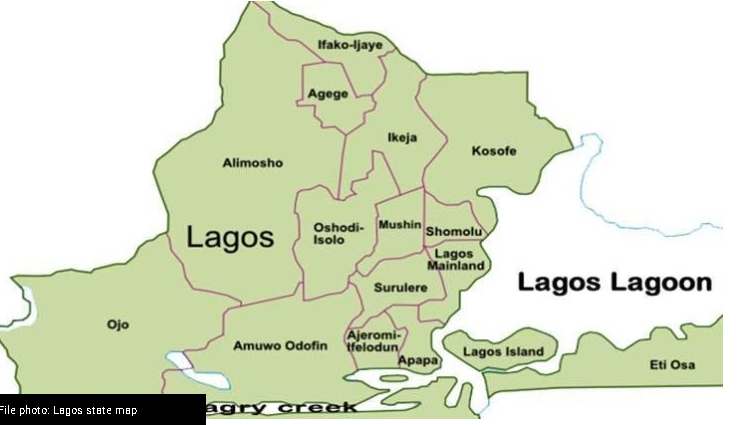
The Lagos State Government has launched a new strategic roadmap aimed at strengthening regulation, improving learning outcomes, and modernising oversight across the education sector.
The initiative, introduced on Wednesday by the Office of Education Quality Assurance (OEQA), was unveiled at the Lagos Chambers of Commerce and Industry in Ikeja, where education stakeholders and policymakers emphasised a shift toward data-driven supervision and technology-enabled reforms.
Officials described the framework as a major step toward raising standards in both public and private schools, with a stronger focus on accountability, efficiency, and measurable impact.
Commissioner for Basic and Secondary Education, Jamiu Tolani Alli-Balogun, said the roadmap aligns with the state’s broader development agenda and positions quality assurance as a central pillar of education reform.
He said the renewed approach would strengthen collaboration with relevant agencies to improve learning outcomes, enhance teacher capacity, and ensure that Lagos education remains globally competitive.
“This represents a renewed OEQA that is more focused and professional in partnering with relevant agencies to improve learning outcomes, enhance teacher capacity, and ensure that the future of education in Lagos State is secure, credible, and globally competitive,” he said.
A key component of the reform is the planned digitisation of private school registration, which is expected to simplify processes, reduce bureaucratic delays, and minimise discretionary interference in regulatory procedures. Officials say the move will also strengthen compliance and raise operational standards across schools in the state.
In her presentation, the Permanent Secretary in the Ministry of Basic and Secondary Education, Abisola Dokunmu-Adegbite, said the strategy is designed to institutionalise consistency in learning outcomes while strengthening monitoring and accountability systems.
She noted that the reforms prioritise measurable results over policy declarations, with a focus on ensuring that improvements are reflected directly in classroom performance.
According to her, sustained progress in the education sector will require coordinated efforts among government institutions and other stakeholders, stressing that education remains central to long-term development.
Earlier, OEQA Director-General, Sulaimon Ogunmuyiwa, described the roadmap as a refinement of the agency’s mandate, centred on regulation, evaluation, and monitoring of schools.
He summarised the new direction as: “Regulate, Evaluate, and Monitor to Improve Schools,” adding that the reforms were developed from an internal review aimed at improving efficiency, reducing manual processes, and motivating staff performance.
Ogunmuyiwa explained that implementation would follow a structured framework known as SCRIPT, which focuses on Staff Capacity, Collaboration, Revenue, Improved Governance, Professionalism, and Technology.
He urged staff and stakeholders to fully embrace the reforms, noting that the initiative is intended to modernise school oversight and improve the overall quality of education delivery in Lagos State.