

The Federal Government has reaffirmed its commitment to building a technology-driven and globally competitive education system with the inauguration of the Katsina State Smart Model Secondary School in Radda, Katsina State.
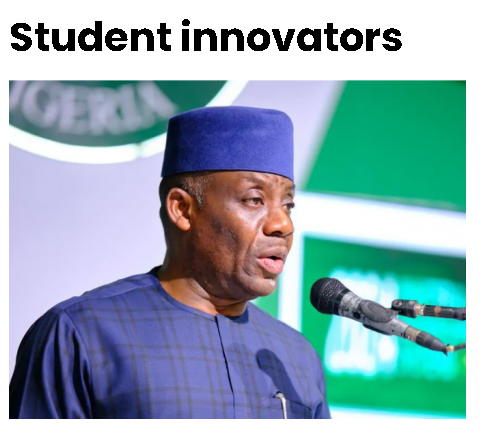
Minister of Education, Dr. Tunji Alausa, commissioned the project alongside Katsina State Governor, Malam Dikko Radda, describing the school as a major step toward preparing Nigerian students for the demands of the modern global economy.
According to a statement issued by the minister’s Special Adviser on Media and Communications, Ikharo Attah, the Smart School represents more than just physical infrastructure, but a symbol of innovation, opportunity and strategic investment in human capital development.
Alausa commended Governor Radda’s leadership under the state’s Build-Your-Future Blueprint, noting that Katsina’s investments in access to education, infrastructure and teacher development reflect a strong commitment to sustainable growth through education.
He said the initiative aligns with President Bola Tinubu’s Renewed Hope Agenda and forms part of broader reforms under the Nigerian Education Sector Renewal Initiative.
The minister explained that the initiative focuses on expanding access to education, strengthening Science, Technology, Engineering, Mathematics and Medical Sciences as well as Technical and Vocational Education and Training, while also promoting digital learning, inclusive education and improved governance systems.
Highlighting recent achievements, Alausa disclosed that more than ₦106 billion in Universal Basic Education Commission matching grants had been accessed by states within the last 18 months.
He added that over ₦22 billion had been invested in teacher development, while ₦2.035 billion was released to School-Based Management Committees nationwide.
According to him, more than 10,000 classrooms have been renovated, 978,000 teachers trained and over 7.8 million textbooks distributed across the country.
The minister also announced that the revised Primary Education Curriculum is already in use nationwide, while a new Secondary Education Curriculum will begin implementation in the next academic session.
On technical and vocational training, he revealed that over 160,000 youths are currently receiving training in more than 1,200 TVET centres nationwide, with over one million applications recorded in the latest phase.
He further highlighted ongoing digital reforms, including the deployment of a cloud-based Annual School Census and the introduction of the Learner Identification Number to strengthen planning, transparency and accountability in the education sector.
Alausa reaffirmed the Federal Government’s commitment to tackling the out-of-school children crisis through stronger collaboration with state governments, describing the Katsina Smart Model Secondary School as a national model for smart education and transformative learning.
Governor Radda, in his remarks, said the project reflects his administration’s belief that education remains the most important responsibility of government to the people.
He assured that the state would continue expanding access to quality education across all zones, adding that his administration has already implemented wide-ranging reforms aimed at repositioning the education sector in Katsina State.