

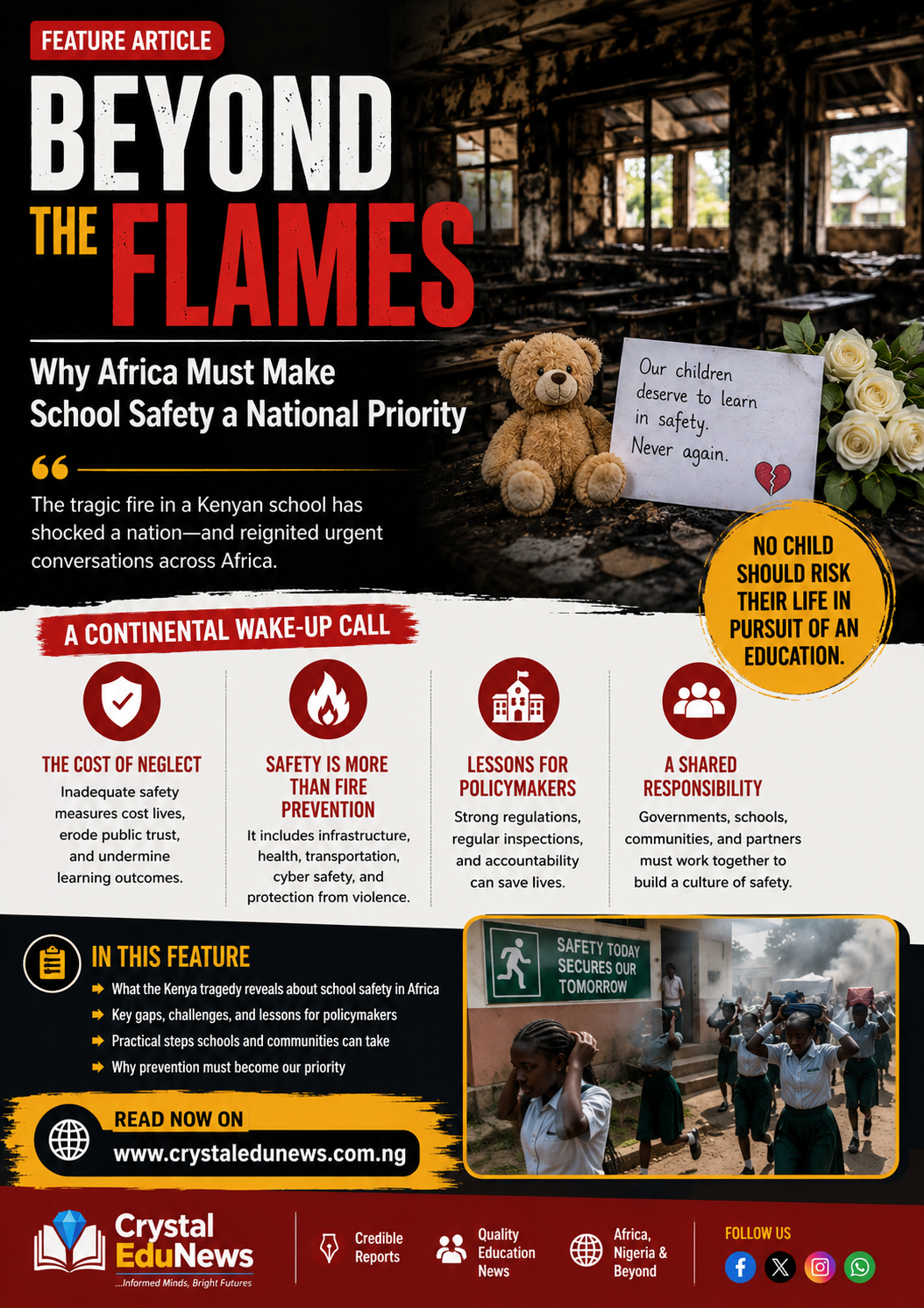
The tragic fire that claimed the lives of students at a Kenyan boarding school has once again drawn attention to a troubling reality across Africa: many schools remain vulnerable to preventable disasters. While investigations continue into the cause of the incident, the tragedy has sparked a broader conversation about school safety, emergency preparedness, and the responsibility of governments to protect learners.
For many Africans, the news was painfully familiar. Over the years, several countries on the continent have witnessed devastating incidents in schools—from fires and building collapses to stampedes, floods, and security breaches. Each tragedy is often followed by public outrage, promises of reform, and calls for accountability. Yet many schools continue to operate with inadequate safety infrastructure and limited emergency response capabilities.
Beyond Kenya
The Kenyan incident is not an isolated case. Across Africa, rapid population growth and increasing demand for education have placed enormous pressure on school systems. In many communities, aging infrastructure, overcrowded classrooms, poorly maintained hostels, and insufficient funding have created environments where accidents can quickly turn fatal.
Boarding schools, in particular, face unique challenges. Thousands of students spend extended periods away from their families, relying entirely on school authorities for their safety and well-being. When emergency systems fail, the consequences can be devastating.
The tragedy in Kenya therefore raises questions that extend far beyond one institution. How many schools have functioning fire alarms? How many conduct regular emergency drills? Are school buildings routinely inspected for safety compliance? In many cases, the answers remain uncertain.
The Price of Neglect
School safety is often viewed as a secondary concern, receiving attention only after a disaster occurs. Budget allocations frequently prioritize classroom construction, teacher recruitment, curriculum reforms, and examination administration, while safety measures receive comparatively little investment.
A school cannot fulfil its educational mission if students and staff are exposed to avoidable risks. Every preventable death represents not only a personal tragedy for affected families but also a failure of governance and institutional responsibility.
Moreover, safety concerns affect learning outcomes. Students perform better in environments where they feel secure. Parents are more willing to send their children to school when they trust that adequate safeguards are in place. Conversely, recurring incidents can erode public confidence in educational institutions.
More Than Fire Prevention
The current discussion should not be limited to fire outbreaks alone. School safety encompasses a wide range of issues, including structural integrity, health and sanitation standards, transportation safety, disaster preparedness, cyber safety, and protection from violence.
In some African countries, schools face threats from armed groups and criminal activity. In others, natural disasters such as floods and storms pose significant risks. Urban schools may contend with overcrowding and infrastructure deficiencies, while rural schools often struggle with limited access to emergency services.
A comprehensive approach to school safety must address these diverse challenges rather than focusing on individual incidents in isolation.
The Lessons in this
The Kenya tragedy presents an opportunity for governments across Africa to reassess existing safety frameworks.
Education ministries should work closely with emergency management agencies, fire services, local authorities, and school administrators to establish clear safety standards. Regular inspections must become mandatory rather than occasional. Schools should be required to maintain functional emergency equipment and conduct routine drills that prepare students and staff for potential crises.
Equally important is accountability. Safety regulations lose their effectiveness when violations carry no consequences. Institutions that fail to comply with established standards should face appropriate sanctions to encourage adherence and protect learners.
School administrators are the first line of defense in ensuring student safety. Effective leadership involves more than academic management; it requires proactive risk assessment and preparedness.
Administrators should routinely evaluate facilities, identify hazards, and develop emergency response plans. Teachers and non-teaching staff must receive training on crisis management procedures, while students should be educated on safety protocols from an early age.
Creating a culture of safety requires continuous effort rather than reactive measures following emergencies.
Africa’s education sector has made significant progress in expanding access to learning opportunities. Millions more children are enrolled in schools today than in previous decades. However, access alone is not enough. Educational institutions must also provide environments where students can learn without fear of preventable harm.
The Kenyan tragedy serves as a reminder that school safety is not merely an administrative issue—it is a fundamental component of the right to education. Every child deserves a learning environment that protects their life, health, and future.
The most important lesson from the recent tragedy is that prevention must take precedence over reaction. Public attention often fades once investigations conclude and headlines disappear. Yet meaningful change requires sustained commitment long after the immediate shock subsides.
Governments, school owners, communities, and development partners must work together to strengthen safety systems across the continent. The goal should not simply be to respond better when disasters occur, but to reduce the likelihood of such tragedies happening in the first place.
The loss of young lives in Kenya has reignited a critical conversation. The challenge now is ensuring that the discussion leads to lasting reforms rather than becoming another moment of collective grief soon forgotten.
Because no child should have to risk their life in pursuit of an education.
S F-3