

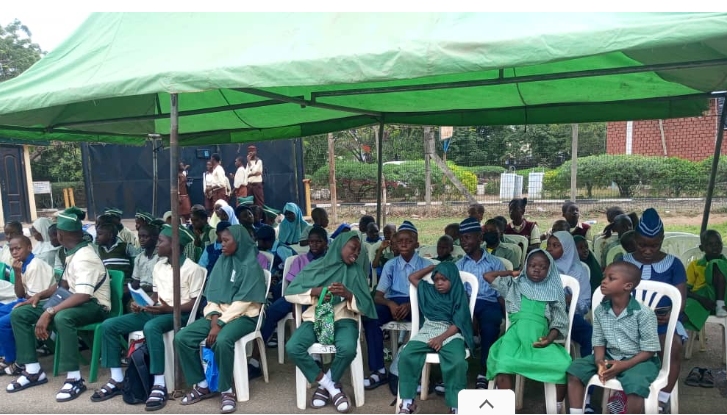
The Federal Government has intensified efforts to improve access to quality basic education across Nigeria, rolling out large-scale distribution of instructional materials and infrastructure to public schools nationwide.
Executive Secretary of the Universal Basic Education Commission (UBEC), Aisha Garba, disclosed this during the flag-off ceremony for the distribution of learning materials to public basic schools in the Federal Capital Territory (FCT), held in Abuja.
Garba said the initiative reflects the government’s commitment to inclusive and equitable education, ensuring that every Nigerian child—regardless of background—has access to quality learning opportunities.
She outlined key interventions already underway, including the construction of over 10,000 classrooms and the training of more than 500 teachers to strengthen teaching capacity across the country. According to her, UBEC has also distributed over 400,000 teaching and learning materials, alongside more than seven million core textbooks to students nationwide.
In a targeted effort to address the out-of-school crisis, Garba revealed that over 100,000 Koranic learners, particularly those in Sangha Islamic education, have been reached, while about 700,000 out-of-school children have been successfully reintegrated into classrooms.
Describing the achievement as a major milestone, she emphasized the importance of collaboration with grassroots partners in driving these outcomes.
The UBEC boss linked the initiative to President Bola Tinubu’s Renewed Hope Agenda, noting that it prioritises the Nigerian child as a central pillar of national development.
In the FCT alone, schools have received a wide range of materials, including textbooks, writing supplies, digital tools, and other essential items designed to enhance both teaching and learning. These include thousands of exercise books and pencils, dozens of interactive smart boards, desktop computers, school bags, and shoes for students.
Garba stressed that the resources go beyond mere supplies, describing them as critical tools for improving literacy levels and overall learning outcomes in public schools. She added that the materials would be distributed across all six area councils in the FCT to ensure broad access.
Nigeria’s basic education sector has long faced challenges such as inadequate infrastructure, insufficient teaching resources, and a high number of out-of-school children driven by poverty, insecurity, and regional disparities.
UBEC, established to coordinate nationwide basic education efforts, continues to scale up interventions aimed at closing these gaps. Despite progress, authorities acknowledge that sustained investment and targeted programmes remain essential to achieving lasting improvements in access and quality.