

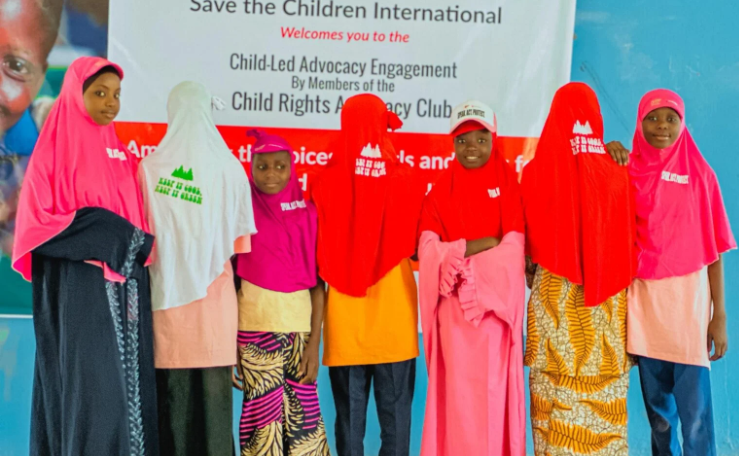
Children from the Child Rights Advocacy Club in Mashi Local Government Area of Katsina State have raised urgent concerns over worsening environmental and climate-related conditions they say are endangering their safety, health, and access to quality education.
During an advocacy visit to the Mashi Council Chairman and the District Head of Mashi on Sunday, the children spoke passionately about the daily challenges they face, warning that the deteriorating state of their school environments is becoming increasingly unsafe and unconducive for learning. The visit, supported by Save the Children International under the Education Cannot Wait project, gave the young advocates a platform to demand immediate intervention from authorities.
Speaking on behalf of her peers, A’isha Mutaka emphasized the need for safe and reliable water sources in schools, especially during flood periods when contaminated water poses serious health risks. She stressed that access to clean water is essential to safeguarding students’ well-being and ensuring consistent school attendance.
The children also called for improved sanitation facilities, pleading for clean, well-maintained toilets equipped with hand-washing stations to curb open defecation and prevent the spread of diseases. They noted that poor hygiene conditions continue to expose many pupils to avoidable health hazards.
Highlighting environmental concerns, Halimatu Yusuf urged authorities to prioritize effective waste management systems and rehabilitate drainage infrastructure to prevent flooding around schools. Blocked waterways, she said, often worsen flood situations, disrupting learning and damaging school property.
Salamatu Mohammed advocated for intensified tree-planting campaigns and stricter enforcement against deforestation, noting that greener school environments would help reduce extreme heat and shield students from the growing impacts of climate change.
Adding to the concerns, Abdulhamid Surajo called for strengthened school security through proper fencing and the deployment of guards. He warned that open school compounds have allowed grazing activities that damage school property and disrupt learning, while also limiting opportunities for school gardening initiatives.
The children identified several schools as being particularly affected, including Government Pilot Secondary School Majigiri, Afadu Primary School, and Doguru Primary and Secondary Schools.
In response, the Mashi Council Chairman, Salisu Kallah, represented by his deputy Jamilu Yusuf, assured the children that their concerns would not be ignored. He pledged that the council would revisit and enforce existing measures against illegal tree cutting and work toward creating safer and more conducive school environments.
The District Head of Mashi, Kabir Aminu, also known as the Iyan Katsina, commended the children for their courage and called for the establishment of environmental clubs in schools, alongside broader community initiatives to combat environmental degradation and promote sustainability.
The event also featured creative performances, as the children used drama and artistic expression to highlight issues of gender inequality, further underscoring the wide range of challenges affecting their lives.
Their message was clear: without urgent action, the combined pressures of climate change and environmental neglect will continue to undermine their right to safe, quality education.