The Federal Government has taken another major step toward modernising teacher education with the distribution of Information and Communication Technology (ICT) equipment to 15 Federal and State Colleges of Education across Nigeria, in a move aimed at strengthening digital learning, improving teacher training, and expanding access to quality education.
The intervention, funded by the Government of Japan through the UNESCO International Institute for Capacity Building in Africa (UNESCO-IICBA), is part of a regional initiative designed to promote continuous and inclusive access to safe and quality education, particularly for girls and vulnerable learners across West Africa.
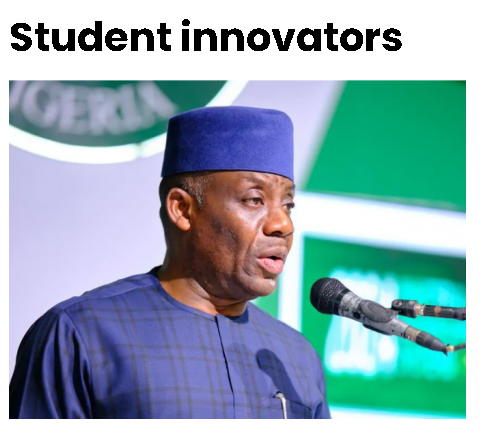
Speaking during the official handover ceremony in Abuja, the Minister of State for Education, Professor Suwaiba Said Ahmad, described the project as a strategic investment in the future of Nigeria’s education system and a key component of the Federal Government’s education reform agenda under President Bola Tinubu’s Renewed Hope programme.
According to the minister, empowering teachers with digital tools and modern teaching resources is essential to improving learning outcomes and preparing students for a rapidly evolving digital world.
“Teachers remain the backbone of every education system. No education reform can succeed without well-trained, motivated, and digitally empowered teachers,” she said.
Professor Ahmad explained that the ICT facilities would support both pre-service and in-service teacher training, increase access to digital learning materials, and encourage innovative classroom practices across the beneficiary institutions.
She noted that the initiative would also help bridge educational inequalities, particularly for girls, by creating more inclusive and technology-driven learning environments.
The minister further highlighted the Federal Ministry of Education’s ongoing priorities, including Technical and Vocational Education and Training (TVET), Science, Technology, Engineering and Mathematics (STEM), girl-child education, digitalisation, quality assurance, and efforts to reduce the number of out-of-school children.
Alongside the equipment distribution, consultations were also held on school safety and infrastructure protection to ensure learning environments remain secure and conducive for students and teachers.
Director of the Colleges of Education Department and Project Chairperson, Dr. Uchenna Uba, described the initiative as a significant milestone in efforts to improve teacher education and strengthen educational delivery nationwide.
“Today’s ceremony reflects a collective commitment to strengthening teacher education, fostering innovation in teaching and learning, and ensuring equal access to quality education for all, especially girls,” she said.
She added that the deployment of digital resources would enhance classroom instruction, improve access to educational materials, and equip teachers with the technological skills needed for modern education.
“Every economy in the 21st century demands innovation, digitalisation and technology-driven teaching approaches. The deployment of laptops, tablets, desktop computers, smart boards, projectors, printers and other digital resources will undoubtedly enhance the teaching and learning process,” she stated.
Representatives of development partners also reaffirmed their support for Nigeria’s education sector. Japan’s Charge d’Affaires, Mr. Hitoshi Kozaki, expressed confidence that the equipment would significantly improve teacher preparation and learning outcomes, while UNESCO-IICBA Director, Dr. Quentin Wodon, said the intervention would contribute meaningfully to advancing teacher education and promoting girl-child education across the country.
The 15 beneficiary institutions include Federal College of Education, Kontagora; Federal College of Education, Zaria; Federal College of Education (Technical), Gombe; Federal College of Education, Yola; Federal College of Education (Technical), Asaba; Federal College of Education (Special), Oyo; Federal College of Education (Technical), Umunze; College of Education, Zuba; Isaac Jasper Boro College of Education; Enugu State College of Education (Technical); Sa’adatu Rimi College of Education, Kano; Adamu Augie College of Education, Argungu; Shehu Shagari College of Education, Sokoto; Adamawa State College of Education, Hong; and Taraba State College of Education, Zing.
The distributed equipment includes 65 laptops, 71 tablets, desktop computers, interactive smart boards, projectors, printers, and backup hard drives, all aimed at enhancing digital teaching and learning across the institutions.
The initiative marks another significant effort by the Federal Government and its international partners to build a digitally skilled teaching workforce capable of delivering quality education and preparing learners for the demands of the modern economy.
FG, Japan Partner to Drive Digital Transformation in Teacher Education as 15 Colleges Receive ICT Equipment

ByElizabeth Jimoh
Jun 3, 2026