

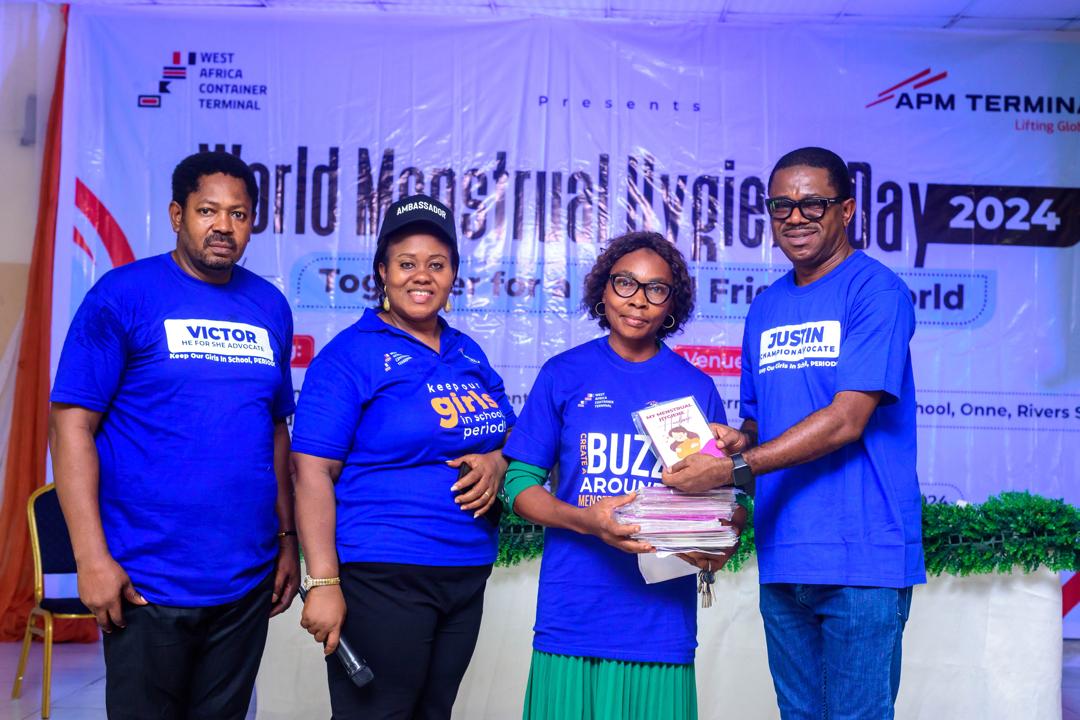
In a bid to combat period poverty and stigma associated with menstruation, the West Africa Container Terminal (WACT) has joined forces with Dofy Global to empower 150 students from Government Secondary School, Onne, Rivers State, in producing eco-friendly reusable sanitary pads.
The initiative, part of WACT’s Menstrual Justice Programme launched in late 2023, aims to educate and equip students, both female and male, with the skills to create sustainable menstrual hygiene products. Speaking at the event marking the 2024 World Menstrual Hygiene Day, Justin Okwuofu, WACT’s Community Relations Manager, emphasized the importance of breaking societal taboos surrounding menstruation.
Okwuofu highlighted the significant challenges faced by female students, including missing classes or exams due to menstruation and resorting to extreme measures like trading sex for sanitary products. He underscored WACT’s commitment to addressing these issues through education and practical solutions.
“Aside from the financial burden posed by conventional disposable pads, our programme aims to empower students with knowledge and skills to produce reusable pads that are both cost-effective and environmentally friendly,” Okwuofu stated.
The initiative included providing each participant with materials and two sets of reusable eco-friendly pads, supplemented by the donation of four new sewing machines to Government Secondary School, Onne. This support enables students to continue producing pads independently, thereby promoting sustainability within the community.
Chinelo Obienyem, WACT’s Senior People Business Partner, emphasized the significance of World Menstrual Hygiene Day in raising awareness and promoting menstrual health among young girls. She highlighted how the initiative not only aids in managing periods with dignity but also empowers girls with valuable skills for their personal and educational development.
Victor Akubor, CEO of Dofy Global, commended the initiative for addressing the broader implications of menstrual health on social and economic inequalities among girls and women. He stressed the need for continued efforts to support girls’ education, health, and safety.
Clara Wali, Principal of Government Secondary School, Onne, expressed gratitude for the programme, noting its humanitarian impact in reducing the school’s dependency on external donations for sanitary products.
The collaboration between WACT and Dofy Global underscores a proactive approach towards tackling menstrual hygiene challenges in local communities, promoting sustainable practices, and fostering empowerment among young students in Rivers State. The event marked a significant step towards breaking down barriers and promoting inclusive dialogue on menstrual health and hygiene in Nigeria.