

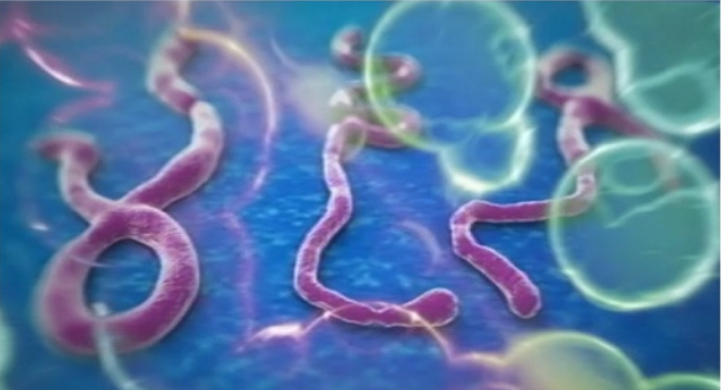
A Consultant in Community Medicine at the University of Uyo Teaching Hospital, Dr Emem Peters, has urged Nigerians to remain vigilant following the emergence of a new strain of the Ebola virus known as Bundibugyo.
Peters gave the warning during an interview on Channels Television’s The Morning Brief, explaining that the new strain differs from the Zaire strain responsible for the 2014 Ebola outbreak in West Africa.
According to her, the Bundibugyo strain is particularly concerning because there is currently no approved vaccine or specific treatment available for managing the infection.
“This particular Ebola virus disease outbreak is caused by a different strain called the Bundibugyo strain, different from the one we had in 2014 that was the Zaire strain, and it’s of concern to us,” she said.
“We do not have a vaccine yet to control this, and there are no known treatments for its management. It’s all early detection and supportive care.”
Her comments come amid reports of a fresh Ebola outbreak in the Democratic Republic of Congo, where authorities have recorded over 500 suspected cases and more than 130 deaths.
Dr Peters explained that Ebola is a viral haemorrhagic disease capable of damaging blood vessels and multiple organs, often leading to severe bleeding, shock and death in critical cases.
Although Nigeria has not recorded any confirmed case of the disease, she stressed the need for precautionary measures to prevent possible spread into the country.
She identified common symptoms of the disease to include fever, body weakness, headache, pain, vomiting and diarrhoea, adding that some patients may also experience bleeding.
“The symptoms one should look out for would include fever, pain, generalized body weakness, headache, vomiting, diarrhea, and in some extreme cases, you could have bleeding,” she stated.
The medical expert also explained that Ebola has an incubation period ranging from two to 21 days after exposure before symptoms begin to appear.
“For the incubation period, the time between exposure and manifestation of the disease is basically two to 21 days,” she added.
Peters revealed that the Nigeria Centre for Disease Control (NCDC), alongside the Port Health Services of the Federal Ministry of Health, has already activated surveillance measures at airports, seaports and land borders.
According to her, thermal screening, temperature checks and health assessments for travellers are currently ongoing at entry points across the country.
She also noted that laboratories and health facilities nationwide have been placed on alert following directives issued by the NCDC after the World Health Organization declared the outbreak.
“Preparations are ongoing. We are being prepared because, as soon as the World Health Organization declared it, NCDC sent out circulars to all institutions and laboratories,” she said.
Peters added that emergency response plans are being activated across primary, secondary and tertiary healthcare institutions, while medical personnel are undergoing training and simulation drills in preparation for possible cases.
She further advised Nigerians to avoid unnecessary contact with wild animals and bushmeat, which have been linked to the spread of Ebola in previous outbreaks.
“For my fellow Nigerians, what I would say is that first of all, we must prevent having contact with animals linked to the disease. Bushmeat handling is one of the ways it spreads,” she warned.
She also encouraged Nigerians to maintain good personal hygiene, wash their hands regularly and avoid direct contact with sick persons without proper protection.