

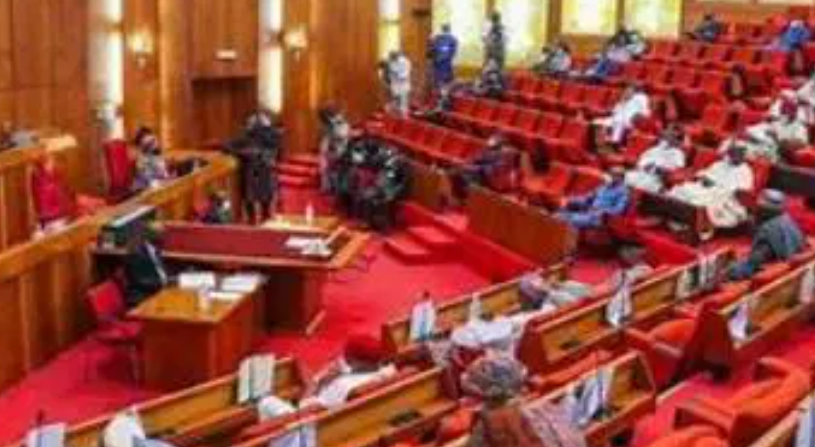
The Senate has directed its joint committee on security to investigate the sudden withdrawal of military personnel from Government Girls Secondary School, Maga, Kebbi State, shortly before bandits launched an attack on the school. The committee is expected to submit its report within two weeks.
Lawmakers also mandated the committee to examine the circumstances surrounding the killing of Brigadier General Musa Uba, whose death has raised fresh concerns about the rising wave of violence across the country.
In a series of far-reaching resolutions reached during Wednesday’s plenary, the upper chamber dissolved its standing committees on National Security and Intelligence, as well as the Air Force, with plans to reconstitute them for improved oversight. It further resolved that the Senate leadership should meet with President Bola Tinubu to brief him on its key deliberations and recommendations.
The resolutions followed a motion presented by Deputy Senate Leader Lola Ashiru, titled, “Urgent Need to Address Escalating Insecurity in Kwara, Kebbi and Niger, Call for Immediate and Comprehensive Federal Intervention.”
The Senate commended President Tinubu and security agencies for their swift actions in securing the release of several kidnapped victims. Lawmakers urged sustained coordinated operations until all abducted persons nationwide are rescued and perpetrators apprehended.
Other recommendations included strengthening local vigilante groups to enable a faster response to attacks and reviewing Nigeria’s firearm laws to reflect current security challenges. The Senate noted that more than 175 countries permit responsible citizens to own firearms, suggesting that Nigeria may need to adopt a similar approach.
The lawmakers also agreed to engage the United States and other allied nations’ parliaments to deepen cooperation in intelligence sharing and counter-terrorism training. A one-minute silence was observed in honour of those who lost their lives in recent attacks.
During debate, Deputy Senate President Jibrin Barau said the spike in terrorist activities was noticeable after former U.S. President Donald Trump made remarks suggesting possible American military intervention over alleged persecution of Christians in Nigeria. He argued that the terrorists’ increased boldness showed they had no interest in the country’s well-being. “They’re moving in convoys to commit these atrocities. So we should deploy technology,” he said.
Senate Leader Opeyemi Bamidele hailed the freedom secured for kidnapped victims in Kwara, Kebbi and Niger states, though he acknowledged that questions lingered about the circumstances of their release. While some Nigerians believe negotiations may have taken place, Bamidele noted that only security agencies can confirm this. He restated the government’s official position that it does not pay ransom. “What is good news,” he said, “is that these people regained their freedom without a life being lost.”
The Senate’s interventions underscore growing national unease over worsening insecurity and the urgent demand for a more decisive and transparent response from security authorities.