

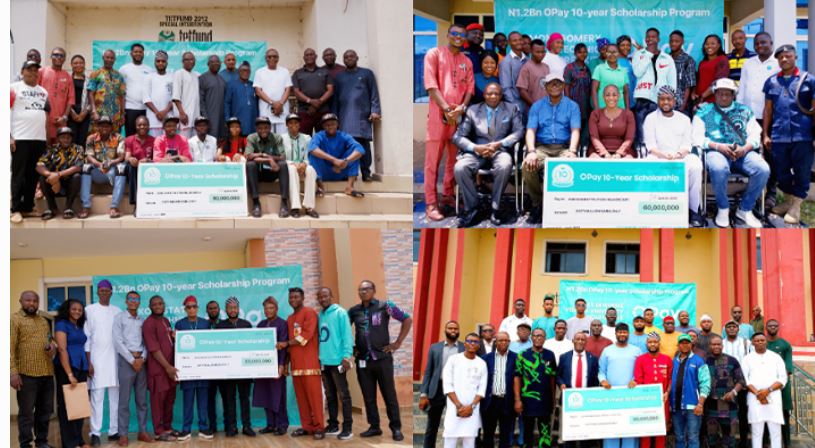
OPay has strengthened its commitment to education and youth empowerment with the signing of new Memoranda of Understanding (MoUs) with four additional tertiary institutions across Nigeria, further expanding its fast-growing scholarship programme.
The newly added partner institutions include Benue State Polytechnic, Kogi State Polytechnic, Montgomery Polytechnic, and Alex Ekwueme Federal University, bringing the total number of institutions under the initiative to 24 nationwide.
The expansion forms part of a ₦1.2 billion, 10-year partnership designed to provide financial support to students across the country. Under the scheme, 20 students from each participating institution will receive scholarships worth ₦300,000 annually. The initiative is targeted at high-performing students from financially disadvantaged backgrounds, ensuring that lack of funds does not hinder academic potential.
With the addition of the new institutions, OPay is extending its reach to more states and campuses, positioning the programme to impact hundreds of students over its duration. The company said the move reflects a deliberate effort to deepen access to education and empower the next generation of Nigerian leaders.
Speaking on the development, the company’s Corporate Social Responsibility Manager, Itoro Udo, emphasised the transformative power of education and the importance of equal opportunity.
“Education is one of the most powerful tools for changing a life, and we believe every student deserves a fair shot at it, irrespective of their background. Through this partnership, OPay is investing in students who have the drive but need the support. We are proud to stand with them and to keep expanding this commitment across more institutions and more communities,” she said.
Since its launch, the scholarship initiative has continued to grow steadily, reinforcing OPay’s long-term vision of promoting inclusive access to both education and financial services. By scaling its partnerships and widening its footprint, the fintech firm is opening doors for more students to pursue their academic goals without financial strain, while contributing to the development of a more equitable education system in Nigeria.