

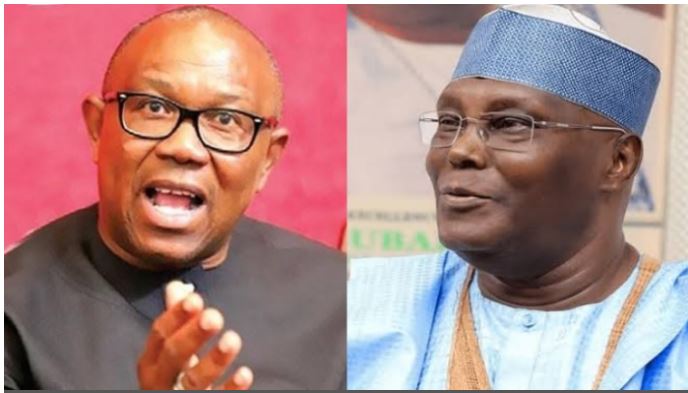
Former Vice President Atiku Abubakar and the 2023 Labour Party presidential candidate, Peter Obi, have criticised the economic policies of President Bola Ahmed Tinubu, saying they have deepened hardship for Nigerian workers.
In separate messages to mark Workers’ Day on May 1, both opposition figures argued that recent reforms, particularly the removal of fuel subsidy, have worsened living conditions across the country.
In a statement titled “Broken Promises, Shattered Hopes: The Nigerian Worker’s Burden Under the Tinubu Administration,” Atiku said this year’s Workers’ Day should be a time of reflection rather than celebration. He accused the administration of turning its “Renewed Hope” agenda into what he described as “renewed hardship” for ordinary Nigerians.
While acknowledging that subsidy removal was necessary in principle, Atiku criticised its execution, describing it as poorly planned and lacking adequate social safety nets. According to him, the policy triggered sharp increases in transportation, food prices, and overall cost of living, leaving workers to bear the consequences without meaningful relief.
He further questioned the transparency of funds reportedly saved from the subsidy removal, alleging that the benefits have not reached ordinary citizens. He also raised concerns about rising government borrowing and the country’s growing debt profile, despite increased revenues from reforms and taxation.
Peter Obi, in his own remarks, described Nigerian workers as the backbone of the nation but lamented that many are now unable to meet basic needs due to inflation and rising living costs. He argued that the current minimum wage no longer guarantees a decent standard of living, warning that economic hardship continues to erode the value of labour.
“It is deeply painful that those who wake up every day to teach, heal, build, farm, produce, transport, protect, and serve our nation are still denied the dignity and fair reward their labour deserves,” Obi said.
He stressed that no nation can develop beyond the strength and welfare of its workforce, noting that when workers struggle, the entire country suffers. Both leaders called for policies that prioritise the wellbeing of Nigerians and provide adequate support to cushion the impact of ongoing economic reforms.