The Federal Government has commenced the implementation of a 40 per cent increase in the Consolidated Academic Allowance (CAA) for lecturers in federal universities, marking a significant step toward improving welfare conditions in the nation’s higher education sector.
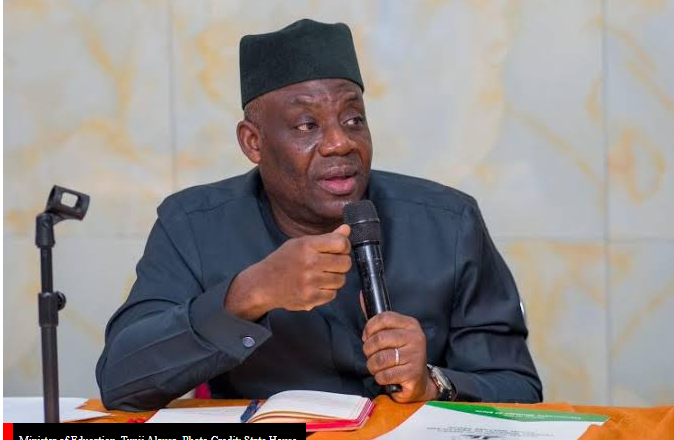
Minister of Education, Dr. Tunji Alausa, disclosed this in a statement issued on Monday, February 9, 2026. The development follows the signing of a revised agreement with the Academic Staff Union of Universities (ASUU) on January 14, 2026, aimed at addressing longstanding concerns and curbing the cycle of industrial actions in public universities.
According to the minister, the government has fulfilled its obligation under the agreement by approving the 40 per cent CAA increase for ASUU members, with effect from January 1, 2026.
“The Federal Government has fulfilled its obligation under the agreement by approving the 40 percent consolidated academic allowance (CAA) increase for ASUU members, with effect from January 1, 2026,” Alausa stated.
He revealed that some federal universities have already begun reflecting the increment in their salary payments, while formal notifications are being issued to all institutions to ensure the adjustment is fully integrated into their payroll systems nationwide.
The minister noted that the move aligns with the broader objectives of the Renewed Hope Agenda to enhance the quality of higher education, improve lecturers’ welfare, and promote stability in the university system.
The announcement comes against the backdrop of a long history of strained relations between ASUU and the Federal Government. In 2009, both parties reached an agreement intended to address critical challenges in public universities, including improved funding, better working conditions, and revitalization of infrastructure.
However, the implementation of that agreement has been fraught with disputes, leading to repeated strikes over the years. In 2010, ASUU embarked on an indefinite strike that lasted more than five months over the government’s failure to honour the agreement. A 59-day strike followed in 2011 for similar reasons.
The most prolonged industrial action occurred in 2013, lasting approximately five and a half months, triggered by issues such as unpaid earned allowances and inadequate funding for university revitalization. In 2014, the union staged a one-week warning strike, citing continued neglect of the 2009 agreement and a subsequent 2013 Memorandum of Understanding.
Further strikes took place in 2017, 2018, and 2020, each lasting several weeks to months and focusing on issues ranging from poor funding to disputes over the Integrated Payroll and Personnel Information System (IPPIS) and the proliferation of new universities without adequate support. The most recent major strike began in February 2022 and lasted over five months, significantly disrupting academic calendars nationwide.
Observers say the implementation of the 40 per cent CAA increase could signal a renewed effort by the government to rebuild trust with university lecturers and ensure lasting stability in Nigeria’s public university system.
FG Begins Implementation of 40% Consolidated Academic Allowance Increase for ASUU Members

ByElizabeth Jimoh
Feb 16, 2026